

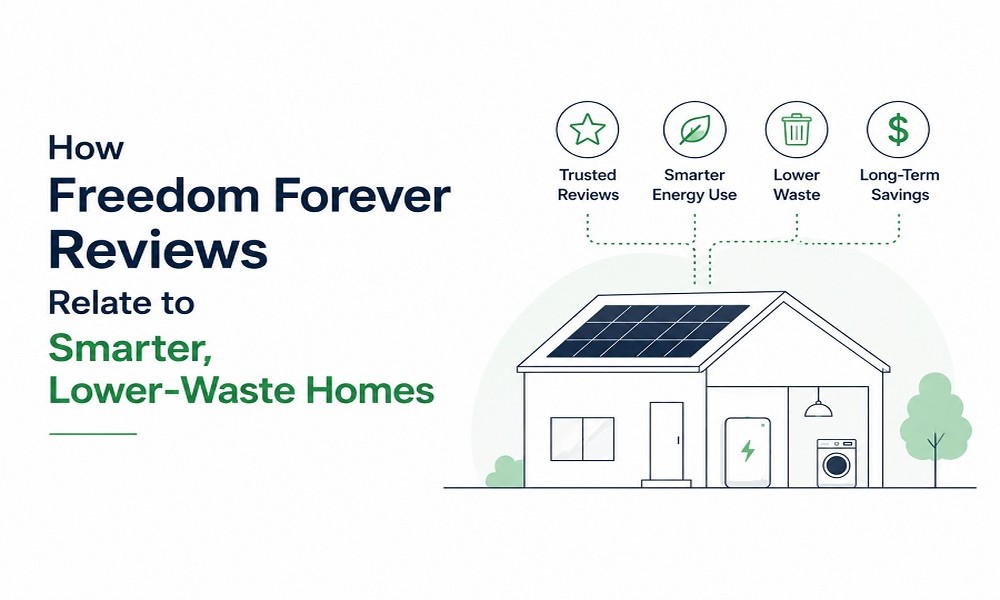
Reducing energy waste has become a priority for homeowners adopting smart home technology, especially as energy costs and usage awareness increase. Rather than relying on behavior changes alone, households increasingly turn to automated systems that manage efficiency in the background. Freedom Forever Reviews reflect a market where smart homes pair clean energy with technology designed to limit unnecessary use while preserving consistent living conditions.
Homeowners no longer see waste reduction as something that requires constant compromise. Smart systems allow households to maintain stable indoor environments while quietly adjusting how and when energy gets used. Waste reduction becomes a function of coordination rather than restraint.
Automation Replaces Manual Energy Control
Traditional energy conservation often depended on manual actions such as adjusting thermostats or turning off devices. These efforts required constant attention and frequently conflicted with comfort preferences. Automation changes this dynamic by handling adjustments automatically based on predefined parameters and observed behavior.
Automated systems reduce waste by managing energy continuously rather than intermittently. Heating, cooling, lighting, and appliances respond to conditions without requiring homeowner input. This consistency limits unnecessary use while allowing households to maintain preferred settings throughout the day.
Data Guides Subtle Adjustments
Smart homes rely on data to identify where waste occurs. Sensors and monitoring platforms track usage patterns, occupancy, and environmental conditions. This information allows systems to make small adjustments that add up over time. Insights drawn from this data help prioritize efficiency without sacrificing comfort. Adjustments are targeted rather than broad, focusing on areas with the greatest impact. As patterns become clearer, waste reduction becomes more precise and reliable.
These changes remain subtle. Systems fine-tune operation without dramatic shifts that affect comfort. Adjustments occur in response to real conditions rather than fixed assumptions, reducing waste while preserving stable indoor environments.
Climate Systems Balance Comfort and Efficiency
Heating and cooling account for a significant share of household energy use. Smart climate systems manage this demand by adjusting operation based on occupancy, weather, and time of day. These systems reduce unnecessary runtime while maintaining consistent temperatures.
Rather than cycling aggressively, smart thermostats have a smooth operation. Homes remain comfortable while systems avoid overcompensation. This balance limits wasted energy without introducing noticeable changes in living conditions. Temperature adjustments occur gradually to maintain stability. Equipment operates more efficiently by avoiding frequent starts and stops. Over time, this steady control supports both comfort and reduced energy use.
Lighting Adjusts Without Disruption
Lighting systems offer another opportunity to reduce waste quietly. Smart lighting responds to occupancy and ambient light levels, reducing use when spaces sit empty or when daylight is sufficient. These adjustments occur without interrupting daily routines. Energy savings accumulate through small, consistent changes rather than dramatic shifts. Homeowners benefit from reduced consumption without needing to think about switching lights on or off. This subtle optimization reinforces efficiency while preserving comfort and convenience.
Over time, lighting systems develop predictable patterns. Homes stay well-lit when needed while avoiding unnecessary use. Waste reduction occurs seamlessly, reinforcing comfort rather than challenging it.
Appliances Operate More Efficiently
Major appliances contribute to household energy use in ways that often go unnoticed. Smart systems coordinate appliance operation based on availability and need. Cycles run when conditions support efficiency rather than default schedules. This coordination reduces peak demand without disrupting household routines. Appliances operate in the background with minimal user awareness. Over time, these incremental adjustments contribute to measurable efficiency gains.
This coordination minimizes overlapping and unnecessary runtime. Appliances complete tasks without competing for power, reducing waste while maintaining functionality. Households experience consistent performance without active management.
Learning Refines Waste Reduction Over Time
Smart homes improve waste reduction as systems learn household behavior. Platforms observe routines and adjust thresholds to match real usage patterns. Over time, adjustments become more accurate and less intrusive. This refinement minimizes unnecessary energy use without requiring active input. Homes benefit from efficiency gains that feel seamless rather than restrictive. As learning progresses, waste reduction becomes an embedded feature of everyday operation.
This learning process reduces overcorrection. Systems focus on meaningful opportunities to limit waste rather than applying rigid rules. Comfort remains consistent as systems adapt to lived patterns rather than generic models.
Visibility Reinforces Efficient Behavior
Visibility supports waste reduction by reinforcing awareness. Dashboards and apps show how adjustments affect usage, helping homeowners understand system behavior. This transparency builds trust in automation. When cause and effect are visible, efficiency feels intentional rather than abstract. Homeowners can see how small shifts contribute to meaningful reductions over time. This clarity strengthens confidence in automated decisions and reinforces long-term engagement.
As households observe outcomes, engagement increases. Understanding how systems reduce waste without affecting comfort strengthens confidence. Visibility complements automation by making efficiency visible rather than invisible.
Customer Feedback Reflects Comfort Preservation
Homeowner feedback often highlights how smart systems reduce waste without noticeable disruption. As automation handles adjustments quietly, comfort remains stable. Online discussions, including Freedom Forever reviews, frequently express a feeling of comfort because systems manage energy in the background.
These patterns suggest that satisfaction depends on subtlety. Reviews reflect appreciation for systems that improve efficiency without drawing attention to changes. Comfort preservation plays a central role in how households assess success.
Consistency Builds Long-Term Acceptance
Consistency supports long-term acceptance of smart energy systems. When homes remain comfortable, households trust automation to manage efficiency. This trust allows systems to operate continuously without intervention.
Over time, waste reduction becomes normalized. Households benefit from lower usage without altering routines. Comfort remains the benchmark against which efficiency measures are judged. Efficiency gains occur quietly as systems optimize in the background. Homeowners rarely notice the adjustments because daily experience remains unchanged. This balance reinforces the idea that effective energy management should enhance comfort rather than compromise it.
Life With Smart Home Design
As waste reduction becomes more automated, smart home design prioritizes balance. Systems focus on minimizing excess use without compromising living conditions. Data-driven adjustments support efficiency through coordination rather than restriction.
Thoughtful, measured system design plays a central role in effective energy management. Smart homes reduce waste most efficiently when comfort and daily routines remain uninterrupted. Automation delivers its greatest impact when efficiency improvements operate seamlessly in the background, supporting performance without requiring constant attention from occupants.
