

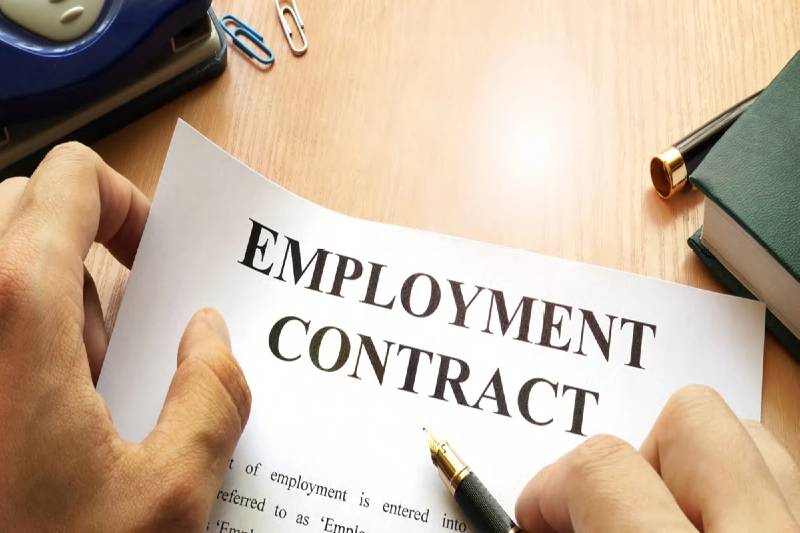
An employment contract is a written agreement that you and your employee must agree on and set the terms of your relationship. You do not have to sign a written agreement with every employee you hire. Written employment contracts are typically the exception rather than the rule. Sometimes, asking a worker to sign a contract is a good decision. You should talk to a lawyer to learn more if you think your employee/employer has breached their employment contracts.
Pros and cons of employment contracts
When we talk about employment contracts, we mean a contract that boundaries the employer’s right to terminate an employee, generally by describing the grounds for termination or making a term of employment.
Some employers make their employees sign a written agreement that includes that they are hired at will—meaning they can quit anytime and can be fired at any time, for any reason. Employers may ask their employees to sign an offer letter or other document agreeing to at-will employment. These documents do not restrict the employer’s right to fire the employee.
Pros
Employment contracts are useful if you want to control employees’ ability to leave your business. For instance, if locating or training a replacement is very costly and time-consuming for your company, you may want a written contract. It will lock the employee into a detailed term or require them to give you prior notice to find and prepare a suitable replacement. You can not force someone to keep working; the employee might comply with the agreement’s terms if there is any liability for not doing so.
Employment contracts will make sense if the employee is going to learn confidential and sensitive data about your business. You can include confidentiality clauses that will not allow the employee to disclose or use any information for personal gain.
Cons
Employment contracts bind you and the employee, thus limiting your flexibility. It may become a problem if you decide that you do not like the contract terms or the business change requirements. In such a case, if you want to modify the contract or terminate it early, you can renegotiate it—but there will be no guarantee the employee will consent to what you want.
For example, if you want to end a three-year contract after half a year because you do not need the employee, you can not simply terminate the employee, as it may lead to a breach of contract. In the same way, if the contract provides the employee with health benefits, you can not later stop paying the benefits as a way to save funds. The only way to change that is by renegotiating them.
